FCT Area Council Elections Conducted Peacefully Across Six Councils
Issued: February 21, 2026
Location: Federal Capital Territory (FCT), Nigeria
Devatop Centre for Africa Development, in collaboration with the Reconciliation and Peace Development Centre (RPDC), provides this update on the Federal Capital Territory (FCT) Area Council Elections held on February 21, 2026. The elections were conducted by the Independent National Electoral Commission (INEC) across the six Area Councils of the FCT, where 68 seats were contested, comprising 6 Chairperson positions and 62 Councillorship seats.
According to official figures, 1,680,316 individuals were registered to vote, with 1,587,025 (94.4%) having collected their Permanent Voter Cards (PVCs). A total of 637 candidates from 17 political parties contested across 2,818 polling units.
As part of a coordinated effort to promote transparency, accountability, and peaceful participation, RPDC led the on-ground election observation by deploying 25 accredited observers across polling units in the FCT. These observers monitored the arrival of electoral officials, commencement of accreditation and voting, voter turnout, security presence, and compliance with electoral procedures, providing structured and verified field reports throughout the day.
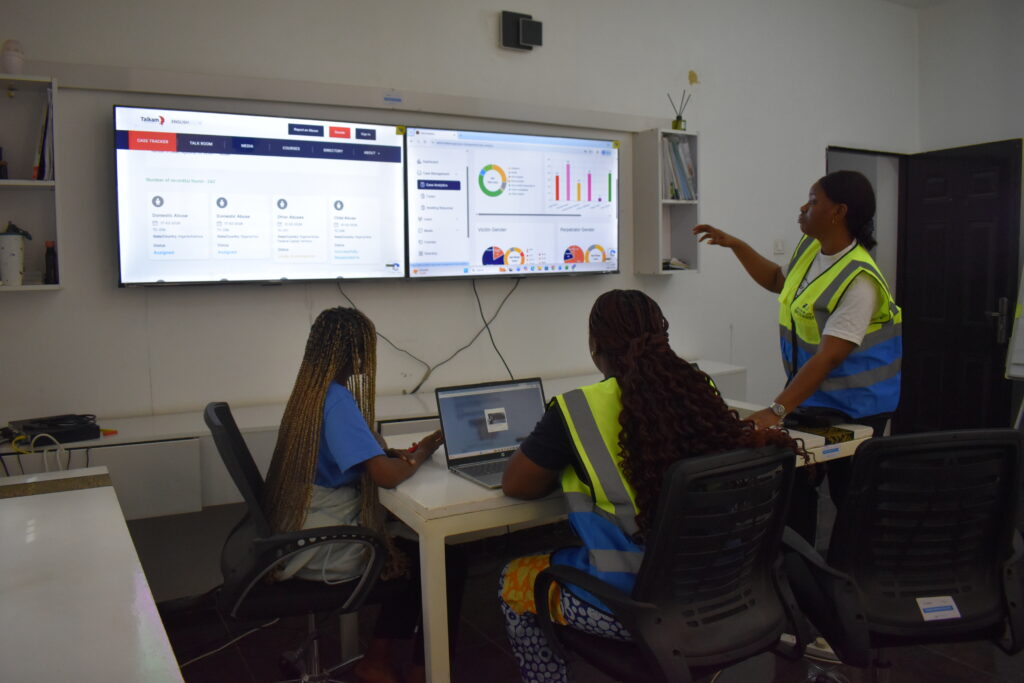
Complementing this effort, Devatop Centre for Africa Development provided technical and digital accountability support through the deployment of the TALKAM App and the Human Rights Election Situation Room. Through this process, Devatop received and verified incident reports in real time, analyzed data from observers and documented cases of electoral concerns.
Observers reported that INEC officials arrived at most polling units between 7:00 AM and 8:30 AM, with a few late arrivals recorded between 8:30 AM and 9:00 AM. Accreditation and voting generally commenced between 8:30 AM and 10:00 AM, although in some locations officials were fully set up and awaiting voters. The Bimodal Voter Accreditation System (BVAS) functioned effectively in most observed polling units, contributing positively to the credibility of the accreditation process. However, some ad-hoc staff demonstrated limited familiarity with the polling unit booklet, indicating the need for enhanced training in future elections.
Security personnel were present in most polling units and, in several instances, arrived before electoral officials, contributing to a largely calm environment. Some security agents expressed concerns regarding unpaid allowances. Voter turnout was observed to be low in several urban areas, with relatively stronger participation in some rural communities. For instance, at Kuje UBE Primary School in Pasali Shibiri Ward, 69 out of 770 registered voters were recorded as having voted at the time of observation.
Five political parties maintained full representation across observed polling units, though many party agents were not wearing INEC-accredited identification tags as required. Reports of vote buying and voter inducement were received in several locations, raising concerns that require attention from relevant authorities.
Overall, the FCT Area Council Elections were largely peaceful and generally well-conducted. The effective use of technology, particularly BVAS and digital reporting tools, contributed positively to strengthening transparency. As collation proceeds, Devatop and RPDC urge all political actors, supporters, and security agencies to sustain the peaceful atmosphere and uphold democratic principles.
For media inquiries, interviews, or participation details, please contact: Devatop Centre for Africa Development
Email: [email protected] , Phone: 09030002362
IKWUEZE CHIAMAKA
Communications Lead
Devatop Centre for Africa Development