Final Mentorship Clinics Conclude Series Empowering Child Domestic Workers Across Lagos Communities
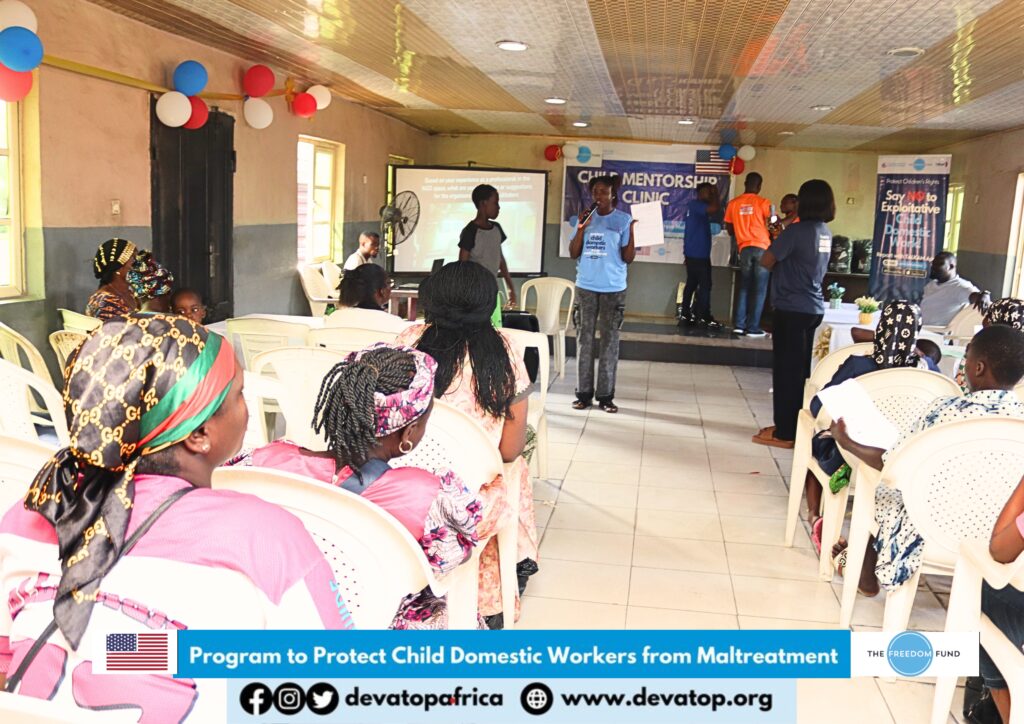
The Mentorship Clinics held in Ijegun and Isashi communities marked the conclusion of the Mentorship Clinic series, following several mentorship sessions implemented over the course of the year under the Protect Child Domestic Workers from Maltreatment Programme. The clinics served as a platform to consolidate learning, reinforce key life skills, and celebrate the progress made by participating children and their guardians.
The final sessions were conducted on 5th December 2025 in Ijegun and 12th December 2025 in Isashi, with support from the Freedom Fund and the United States Department of State. These concluding clinics brought together Child Domestic Workers (CDWs), their guardians, community representatives, facilitators, and project staff to reflect on the mentorship journey that began in July 2025.
The mentorship series was designed to equip child domestic workers with essential life skills, enhance their understanding of personal safety and rights, and strengthen their confidence and self-expression. In parallel, guardians were actively engaged to promote child-friendly, rights-respecting, and supportive caregiving practices within households and communities.
Participants were welcomed by project staff, who reiterated the objectives of the final mentorship clinic and emphasized the importance of consolidating lessons from earlier mentorship sessions. The organisation’s mission and long-standing commitment to protecting child domestic workers were highlighted, alongside appreciation for the partners whose support made the programme possible.
The clinics featured interactive learning activities, including drama and role-play presentations by the children, which illustrated real-life experiences such as abuse and bullying and their impact on children’s well-being. These activities reinforced key messages on empathy, protection, and the importance of reporting unsafe situations. Video presentations showcasing highlights from previous mentorship clinics further allowed participants to reflect on the journey and celebrate collective achievements.
Facilitators delivered targeted messages to both guardians and CDWs, stressing the importance of love, respect, fairness, and open communication in caregiving relationships. Guardians were reminded of their moral and legal responsibilities to protect children in their care, while CDWs were encouraged to practice respectful behaviour, maintain personal safety, and speak to trusted adults whenever they felt unsafe.
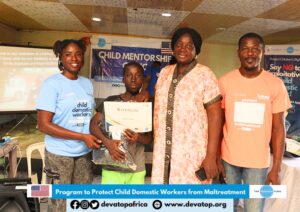 The highlight of the final clinics was the presentation of certificates and mentorship school kits to the participating children. This moment formally marked the successful completion of the Mentorship Clinic series, recognized the commitment and growth of the CDWs, and provided them with practical educational tools to support continued learning beyond the programme.
Across both communities, 44 child domestic workers participated in the concluding mentorship clinics. Key outcomes included improved awareness of child rights and protection issues, strengthened confidence and emotional well-being among the children, and increased commitment from guardians to sustain positive and supportive care practices. Facilitators also observed improved social interaction, openness, and happiness among the children.
Overall, the final Mentorship Clinics provided a meaningful close to a comprehensive mentorship series, reinforcing learning outcomes, celebrating progress, and laying a strong foundation for sustained positive change in the lives of child domestic workers and their caregivers within the participating communities.