Stakeholders Engage in Community Dialogues to Strengthen Protection for Child Domestic Workers in Lagos State
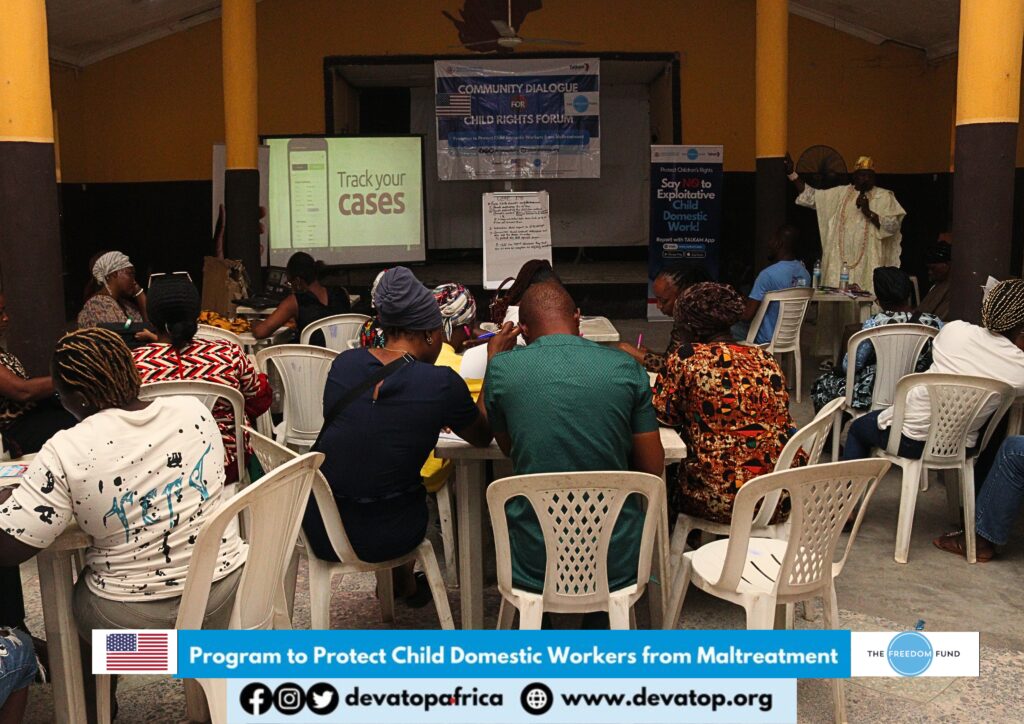
Community leaders, household employers, guardians, and other stakeholders from the Ijegun Egba and Iyana Isashi communities in Lagos State recently convened for a series of community dialogues aimed at strengthening the protection of child domestic workers and addressing the realities of child domestic work at the community level. The dialogues were held on 20th November 2025 in Ijegun and 27th November 2025 in Isashi under the Protect Child Domestic Workers from Maltreatment Program, with support from the Freedom Fund and the United States Department of State.
The community dialogues, themed “Understanding Child Domestic Work,” were designed to deepen participants’ understanding of child domestic work, identify existing gaps and challenges within communities, and promote collective action toward eliminating exploitative practices. Across both locations, participants engaged in open and interactive conversations on what constitutes child domestic work, the myths and facts surrounding it, its prevalence, and the various forms of exploitation faced by children in domestic settings.
 Facilitated by DEVATOP staff, the sessions explored the root causes and consequences of exploitative child domestic work, including poverty, cultural norms, limited access to education, and weak legal awareness. Participants also examined the emotional, educational, and protection needs of child domestic workers, while discussing practical steps households and communities can take to ensure safer and more supportive environments for children .
In both Ijegun and Isashi, DEVATOP’s Monitoring and Evaluation Lead presented findings and impact highlights from ongoing field activities under the program. These presentations revealed progress made in improving awareness of child rights and increasing reporting of abuse, while also underscoring persistent gaps that require continuous community sensitization and stronger engagement of local influencers .
Participants were further divided into breakout groups to reflect on the objectives of the dialogue, propose community-driven solutions, and make commitments toward protecting child domestic workers. Recommendations from these group discussions emphasized the need for sustained sensitization, community monitoring, improved employer–child relationships, and prompt referral of abuse cases to appropriate support services.
A powerful highlight of the dialogues in both communities was the sharing of a lived experience by a survivor of exploitative child domestic work. This moment deepened participants’ understanding of the real-life consequences of maltreatment and reinforced the urgency of collective action to safeguard children.
By the end of the dialogues, participants across both communities expressed strong willingness to collaborate with relevant stakeholders to promote safer household practices, support vulnerable children, and report cases of abuse or maltreatment. Community leaders, guardians, and employers also demonstrated increased commitment to upholding child protection standards and advancing the rights and wellbeing of child domestic workers.
Overall, the Ijegun and Isashi community dialogues contributed to improved awareness, strengthened stakeholder commitment, and increased readiness to act against child domestic work exploitation, reinforcing the importance of sustained grassroots engagement in protecting children from harm .