Artificial Intelligence and Data Protection: Protecting Human Rights in the Age of AI
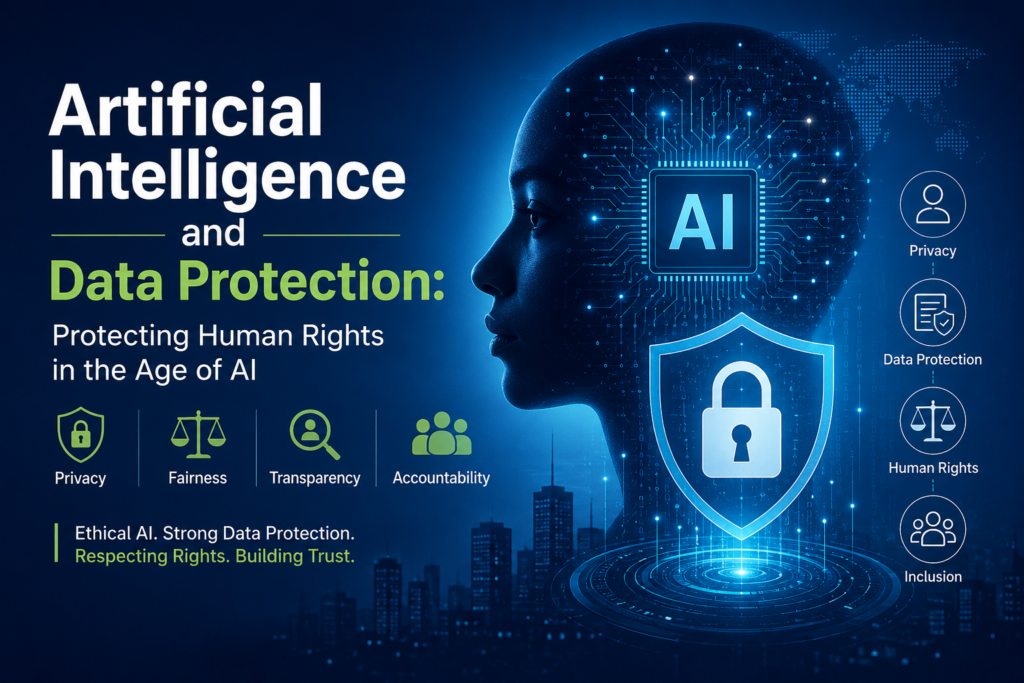
Artificial Intelligence (AI) is reshaping our world at an unprecedented pace. From healthcare and education to banking, law enforcement, humanitarian response, and public administration, AI is transforming how decisions are made and services are delivered. While these innovations promise greater efficiency and economic growth, they also raise important questions about privacy, fairness, accountability, and the protection of fundamental human rights.
As AI systems increasingly rely on large volumes of personal data to function, data protection has become one of the most critical pillars of responsible AI governance. Without appropriate safeguards, AI can expose individuals to privacy violations, discrimination, surveillance, and other human rights abuses.
At DEVATOP Centre for Africa Development, we believe that innovation should advance human dignity rather than undermine it. Responsible AI must be designed and deployed in ways that respect data protection laws and uphold the rights of every individual.
The Connection Between AI, Data Protection, and Human Rights
Artificial Intelligence depends heavily on data. Every recommendation, prediction, or automated decision is driven by information collected from individuals, organizations, and public sources. Much of this information constitutes personal data, making data protection essential throughout the AI lifecycle.
Data protection is more than securing information from cyberattacks. It is about ensuring that personal data is collected lawfully, processed fairly, stored securely, and used transparently while respecting individuals’ rights.
When organizations fail to implement these safeguards, AI can become a tool that violates rather than protects human rights.
Key Human Rights Risks Associated with AI
- Privacy Violations and Mass Surveillance
AI-powered technologies such as facial recognition, biometric identification, and predictive surveillance have significantly expanded the ability of governments and organizations to monitor individuals.
Without appropriate legal safeguards, these technologies may:
- Infringe on individuals’ right to privacy.
- Discourage freedom of expression and peaceful assembly.
- Increase surveillance of journalists, activists, and human rights defenders.
- Enable unauthorized collection, sharing, or misuse of personal information.
Protecting privacy is fundamental to preserving individual freedom and democratic participation.
- Bias and Discrimination in AI Systems
AI systems are only as fair as the data used to train them. When historical or societal biases exist within datasets, AI may replicate or amplify discrimination.
This can result in unfair outcomes in:
- Employment and recruitment
- Healthcare
- Banking and credit scoring
- Criminal justice
- Social protection programmes
Marginalized communities often bear the greatest burden of biased AI systems, making fairness and inclusive data governance essential.
- Automated Decision-Making Without Transparency
Organizations increasingly rely on AI to make decisions about employment, immigration, insurance, education, and public services.
However, many AI systems operate as “black boxes,” making it difficult for individuals to understand:
- Why a decision was made.
- What data influenced the outcome.
- How to challenge an incorrect decision.
Without transparency, accountability becomes difficult, and access to justice may be compromised.
- Data Security and Unauthorized Use of Personal Information
AI systems process enormous quantities of personal data, making them attractive targets for cybercriminals.
Weak security controls can result in:
- Data breaches.
- Identity theft.
- Unauthorized profiling.
- Misuse of sensitive personal information.
Organizations developing or deploying AI must implement robust technical and organizational measures to safeguard personal data throughout its lifecycle.
- Manipulation Through AI and Misinformation
Generative AI has made it easier to create convincing fake images, videos, and audio recordings.
These technologies can be exploited to:
- Spread misinformation.
- Damage reputations.
- Influence elections.
- Promote hate speech.
- Incite violence.
Protecting information integrity is increasingly becoming a human rights and data governance challenge.
- Erosion of Human Autonomy
AI-powered recommendation systems influence what people read, purchase, watch, and believe.
When individuals are unknowingly manipulated through personalized content and behavioural profiling, their autonomy and freedom of choice may be compromised.
Responsible AI should empower users—not manipulate them.
- Predictive Policing and Profiling
AI-powered predictive policing systems often rely on historical policing data that may contain existing social biases.
This can lead to:
- Discriminatory profiling.
- Over-policing of vulnerable communities.
- Violations of due process.
- Erosion of the presumption of innocence.
Human rights principles require that technology supports justice rather than reinforcing historical inequalities.
Why Data Protection Matters in AI
Strong data protection practices provide the foundation for trustworthy AI.
Effective data protection ensures that organizations:
- Collect only the personal data necessary for legitimate purposes.
- Process information lawfully, fairly, and transparently.
- Maintain accurate and secure records.
- Respect individuals’ rights regarding their personal information.
- Prevent unauthorized access, disclosure, or misuse.
- Build public confidence in AI technologies.
Privacy should not be treated as an afterthought but as a core design principle throughout AI development.
Principles for Responsible AI
To ensure AI promotes rather than undermines human rights, organizations should adopt the following principles:
Transparency
Individuals should understand when AI is being used and how important decisions are made.
Accountability
Organizations must remain responsible for decisions made using AI systems and provide mechanisms for redress where harm occurs.
Fairness and Non-Discrimination
AI systems should be trained using diverse, representative, and high-quality datasets to minimize bias and discriminatory outcomes.
Privacy by Design
Privacy protections should be integrated into AI systems from the earliest stages of development rather than added later.
Human Oversight
Critical decisions affecting people’s rights should always involve meaningful human review.
Security
Organizations should implement strong cybersecurity measures to protect AI systems and the personal data they process.
AI and Compliance with the Nigeria Data Protection Act (NDPA) 2023
As AI adoption grows across Nigeria, organizations must ensure that AI systems comply with the Nigeria Data Protection Act (NDPA) 2023 and other applicable legal frameworks.
Compliance includes:
- Processing personal data lawfully and transparently.
- Limiting data collection to what is necessary for specific purposes.
- Implementing appropriate technical and organizational security measures.
- Respecting the rights of data subjects.
- Conducting risk assessments for high-risk processing activities.
- Establishing governance structures that ensure accountability in AI deployment.
Embedding data protection principles into AI systems not only helps organizations comply with legal obligations but also strengthens public trust and reduces ethical risks.
DEVATOP’s Commitment to Responsible AI
At DEVATOP Centre for Africa Development, we recognize the transformative potential of Artificial Intelligence in advancing human rights, improving access to justice, and strengthening digital governance.
As we continue exploring AI-enabled innovations—including enhancements to the TALKAM Human Rights App and our digital case management systems—we remain committed to ensuring that every technological solution is developed with privacy, transparency, fairness, accountability, and human dignity at its core.
We believe that protecting personal data is fundamental to protecting people.
By Joseph Osuigwe Chidiebere, Founder/Executive Director